
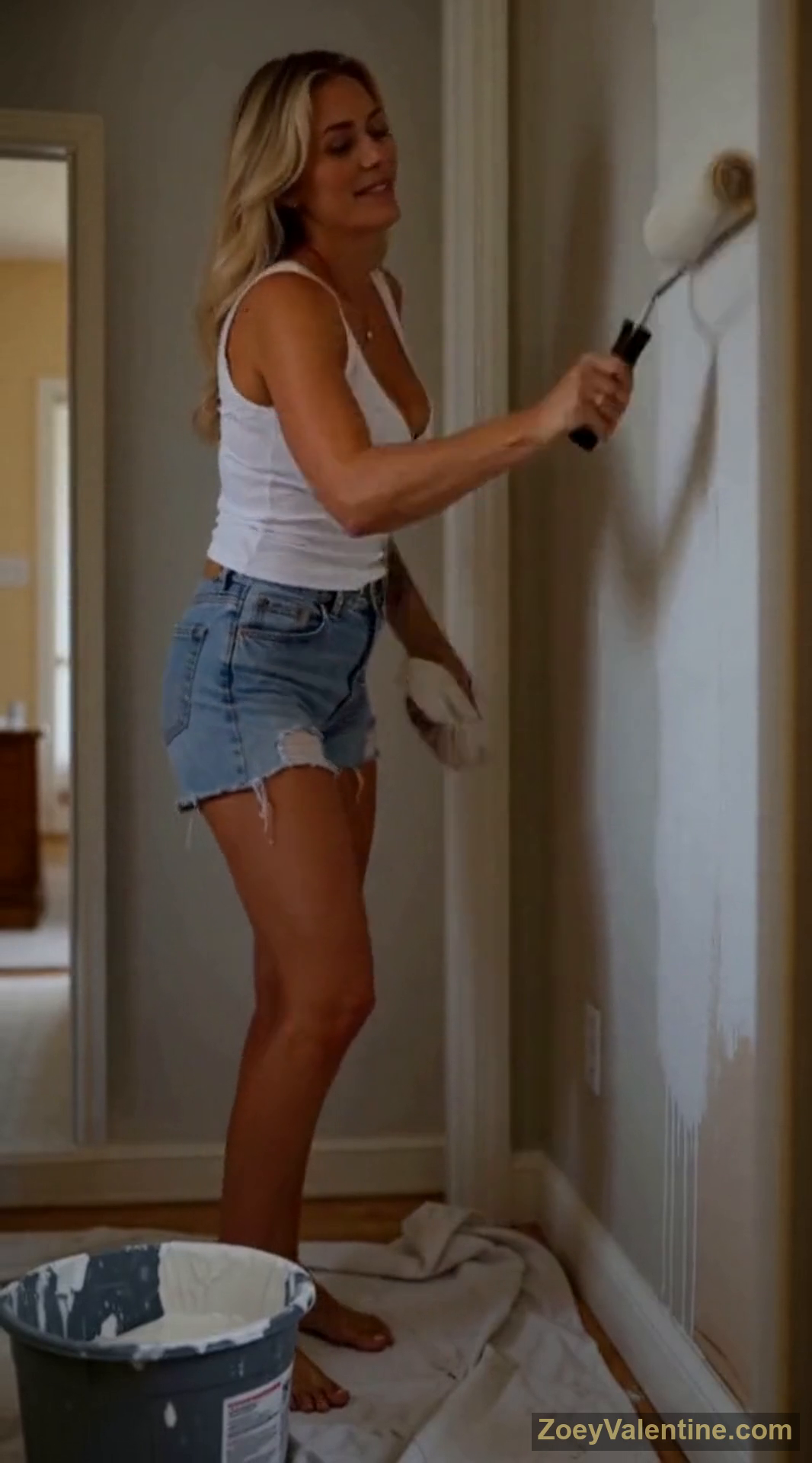
I decided to paint my bedroom this weekend, and I wanted to know how to paint a room fast without it looking like I rushed it. Turns out the two are not the same thing. Speed is about prep and order, not about slapping paint on the wall and hoping. I learned that the hard way on my first room, so let me save you the mess.
This was a full day of drop cloths, a roller in my hand, and a color I kept second-guessing until the first coat went on. Here is the whole thing, start to finish.
Prep is where you actually save the time
Everyone wants to skip prep because it feels like the boring part, but it is the single biggest time saver in the whole job. Fifteen minutes of taping and covering saves you an hour of cleaning paint off trim and floors later. Move the furniture to the middle of the room and throw a drop cloth over it. Tape the baseboards and the window frames. Pull the outlet covers and light switch plates off and put them in a bag so you do not lose the screws.
Fill any holes or dings with spackle and let it dry while you tape. Sand it smooth, wipe the dust off, and you are ready. If the wall is glossy or has a sheen, a quick wipe with a damp cloth helps the new paint grab. This is the part nobody posts about, but it is why the fast painters finish in a day and the slow ones are still going on day three.
The right tools make it fast
Do not fight a cheap roller. A good roller with a thick nap holds more paint and covers more wall per pass, which means fewer trips back to the tray. Use an extension pole so you are not on a ladder for the top half of the wall. And get a decent angled brush for the edges. A brush that splays out makes cutting in miserable and slow.
If you are doing a whole room and you have the budget, a paint sprayer is the fastest option by a mile. It is more setup and more cleanup, so for a single room a roller is usually the better call. But if you are painting a hallway or a whole house, the sprayer pays for itself in time. For one room, roller and brush is plenty fast.
My fast painting order
Cut in the edges first, then roll. Cut in means painting the border along the ceiling, the corners, and the trim with your brush, about two inches out. Do all the cutting in for the whole room before you pick up the roller. Then roll the big open areas while the cut-in is still wet so the roller blends into it without a visible line.
Roll in a W pattern and then fill it in, working top to bottom. Do not press hard, let the roller do the work. Two thin coats beat one thick coat every time. A thick coat drips, takes forever to dry, and leaves streaks. Two thin coats dry faster between passes and give you a smooth finish. If you are using a good paint, the second coat goes on quick because the first one is already dry.
The shortcuts I skip
There are a few shortcuts that sound great and cost you more time in the end. Skipping the primer on a wall that has stains or a big color change means the old color bleeds through and you need three coats instead of two. That is not fast. And do not try to paint over glossy trim without scuffing it first, the paint will peel and you will be redoing it in a month.
The one shortcut that is worth it is using a paint and primer in one for a simple color change on a clean wall. It saves a whole step and it works. Just know when it is not enough, and that is when you are covering a dark color or a stain. That is when you bite the bullet and prime.
By the end of the day I had a room that looked completely different and I did not hate the process. That is the win. If you want to see the parts I do not put out in the open, the messier behind the scenes stuff, head to the members area. It is 18 plus, and it is where I keep the stuff that does not make the blog.